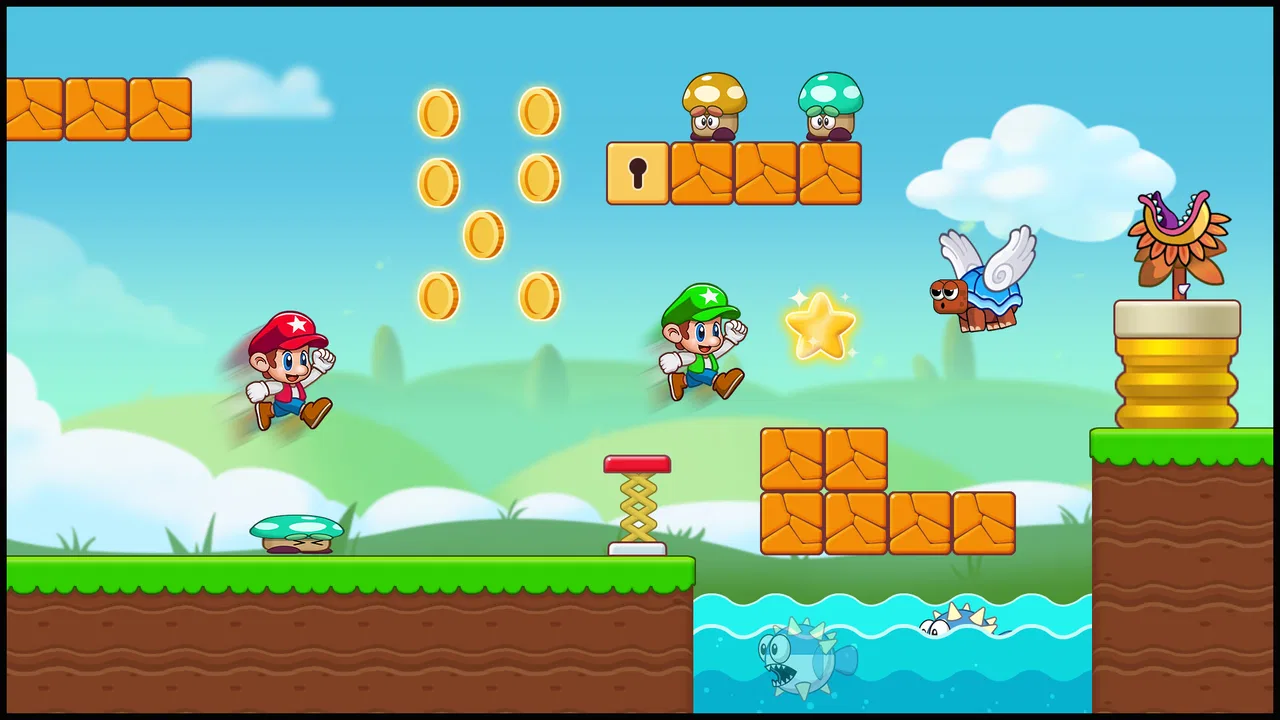
Super Bobby's Dream World
- 4.7
- Rating
- 1.00M
- Installs
- Free
- Price

 Analysis by App-foxy
I spent time with Super Bobby's Dream World as a bright, straightforward adventure game, and its appeal became clearest when I treated it as something that could be passed around on a household device. The basic idea is easy to understand: guide Bobby through an adventurous journey and help rescue the princess. That simple goal makes it approachable, especially for someone who wants a quick game without learning a complicated control system first.
It is a free game from DHZ SOFT, listed for Teen players, and it has built a substantial audience with more than a million installs and an average score of 4.6 from roughly thirty-two thousand ratings. Those figures suggest that the game has found a reliable audience, but they do not remove the need to look at how it actually fits into daily use. In my experience, its strongest quality is its immediate, familiar adventure feel; its main weakness is that players looking for deep systems or a carefully shared family profile may find the experience less suitable.
How Super Bobby's Dream World Works in a Shared Household
I find Super Bobby's Dream World easiest to share when everyone agrees on a simple routine before taking a turn. A quick note about who last played and where the rescue journey paused can spare the next person from guessing or accidentally disrupting a shared run. That small bit of coordination also makes it easier to decide whether this setup suits your household or whether a game with separate player profiles would be a better fit.
You May Also Like

 Blood Strike: 2.5 Anniversary
Blood Strike’s Loadouts Turn Every Drop Into a Tactical Gamble
A close look at Blood Strike’s custom loadouts: how fast access to signature weapons reshapes its battle royale rhythm, rewards preparation, and narrows the gap between fights.

 Pandora - Music & Podcasts
Pandora’s Music Is Easy to Start, but Harder to Recover
Pandora’s strength is its low-effort path from a seed to a station. Its weak spot is how much confidence it asks you to place in connection, setup, and quiet recovery.

 8 Ball Pool
 Is Built on Rivalries, Rematches, and Routine
A close look at the rivalries, rematches, shared routines, and unanswered safety questions that turn a quick pool match into a persistent mobile community.

 Samsung Music
’s Quiet Strength Is Playing What You Already Own
Its reach comes less from spectacle than from dependable access to a personal library. That simplicity is both the app’s strongest retention engine and its ceiling.

 AccuWeather: Weather Radar
AccuWeather Review: A Quick, Clear Forecast for Everyday Decisions
For everyday plans, the best forecast is the one you can understand quickly. AccuWeather makes rain timing, radar, and local conditions easy to act on, with a few trade-offs.

 Hill Climb Racing
Why Hill Climb Racing Still Turns Crashes Into One More Run
A tiny car, a bumpy hill and one more upgrade: Hill Climb Racing keeps resurfacing because its simple chaos makes every near-miss feel personal.
More From Our News Desk



A game that is easy to hand to another player
The most useful household scenario is a shared phone or tablet used in short turns. One person can play a section, hand over the device, and explain the objective without giving a long tutorial. The rescue premise provides enough direction to make the next step feel obvious, while the colorful world gives the game a more welcoming tone than a serious action adventure.
I would especially consider it for a parent who wants to let a child try an adventure game on the same device, or for siblings who take turns during a journey, a waiting-room visit, or a quiet period at home. The game does not need to become a family activity to be useful in that setting. Even a brief handoff works because the central objective remains easy to remember.
That convenience has a trade-off. A shared-device game is only genuinely comfortable when players can understand where the previous person stopped and what they were doing. I found it sensible to agree on a simple routine: finish a clear section, pause at a safe moment, and tell the next player what has already happened. Without that habit, a younger player may simply continue from the current position and make it difficult for someone else to follow the adventure.
What to check before installing it
The game is free to download, but it includes optional purchases priced from $1.99 to $9.99 per item. That is the first boundary I would discuss before putting it on a shared device. A child may reasonably see a purchase prompt as part of the game rather than as a real-money decision, so the adult who owns the device should handle that expectation clearly.
I would also install it while the device is in the hands of the person responsible for the account. That gives the household a chance to review the game’s age context, check how the device handles purchases, and decide whether the title belongs on a child’s personal device or only on a supervised shared one. This is not a criticism of DHZ SOFT; it is simply good practice whenever a free game offers paid items.
The Teen content rating is important in a household conversation. It does not automatically mean that every teenager will enjoy the game, nor does it tell me that a younger child should be left to explore it without an adult’s judgment. I would treat the rating as a prompt to consider the individual child’s maturity and comfort, rather than as a substitute for knowing how that child uses games.
On the technical side, the listed minimum operating system is Android 6.0, which makes the compatibility requirement relatively approachable for older Android hardware. The current version is 1.8.7.185. I would still leave enough storage and update the game before a trip or shared session, since an outdated installation can create avoidable interruptions at exactly the wrong time.
Coordinating turns without built-in family assumptions
For a household, the practical question is not only whether the game is fun, but also how people coordinate around it. I would avoid treating one progress path as if it belonged equally to everyone. If several people want to play independently, separate devices are the cleanest solution. On one device, a shared run is easier to manage than several competing attempts.
A small notebook, a note in the device, or a quick spoken update can solve much of the confusion. Record who played last, what part of the rescue journey was reached, and whether the next player should continue or start again. This may sound overly organized for a casual adventure game, but it becomes useful when different players have different skill levels and do not want their progress changed unexpectedly.
I would also set a stopping point before each session rather than waiting until someone is frustrated. Short, agreed turns make the game feel fairer between siblings. They also reduce the chance that a player will rush through a section simply because another person is waiting. The game’s accessible premise supports this arrangement, even though the household still has to create the routine itself.
One non-obvious advantage of this approach is that it turns the game into a light coordination exercise. A more experienced player can explain a difficult moment without taking over the entire session, while a less experienced player gets a chance to make decisions. That works best when the person helping gives directions only when needed. Constant back-seat coaching can make a simple adventure feel like a test instead of a relaxing game.
Age, trust, and the right kind of supervision
I would not choose this title solely because it looks friendly. The Teen rating means I would make a personal judgment before sharing it with a younger child, particularly if that child uses the device without an adult nearby. The right question is whether the game’s presentation and the child’s habits are a comfortable match, not whether a bright adventure style automatically makes the title suitable for everyone.
Trust also includes money. Because optional items are available, I would explain that a free download does not necessarily mean every part of the experience is free. For a teenager, that can be a useful conversation about digital purchases and permission. For a younger player, I would keep purchasing decisions with the adult and avoid placing the responsibility on the child.
I would be more comfortable recommending it to a teenager who already understands those boundaries, or to a family that keeps the device owner in charge of purchases. I would be less comfortable recommending it as an unsupervised first game for a child who taps through prompts without reading them. The difference is not the game alone; it is the surrounding household setup.
The same principle applies to account boundaries. I would not assume that a shared device means shared ownership of progress, and I would not promise a family profile or a special child mode. If separate players need clearly isolated progress, they should confirm that the available device arrangement actually provides it before investing much time. When that separation matters, a game designed around individual profiles may be a better household choice.
Where it fits among adventure games
Compared with a large story-driven adventure, Super Bobby's Dream World is easier to approach but less likely to satisfy someone who wants extensive character development, complex exploration, or a long list of strategic decisions. Its strength is the direct rescue objective and the uncomplicated invitation to start playing. A heavier alternative may offer more depth, but it also demands more time, attention, and explanation from everyone sharing the device.
Compared with an endless runner, this game has a clearer sense of an adventure journey rather than simply asking the player to survive for as long as possible. That distinction matters in a household. A player can talk about helping Bobby reach the princess, while an endless runner often produces sessions that feel more like repeated score attempts. On the other hand, someone who wants a game that can be played in tiny, disposable bursts may still prefer an endless runner.
It also sits differently from a multiplayer game. I would not select it when the main goal is live competition or cooperation between several people. Its value in a household is more about taking turns and discussing progress than about everyone playing simultaneously. That makes it calmer to share, but it also means the game cannot replace a proper group game when family members want direct interaction.
Another practical comparison is with premium adventure games that have a single upfront cost. A free entry point makes this title easier to try, especially when the household is unsure whether a player will enjoy the style. The presence of optional purchases means the lower initial commitment should be paired with sensible spending boundaries. For families that strongly prefer one fixed payment and no purchase decisions afterward, a paid alternative may feel more comfortable.
Small habits that improve the experience
My first tip is to use the game as a short-session activity rather than promising an entire evening around it. That keeps the rescue journey from becoming a source of arguments over the device and makes it easier for a player to stop at a natural point. If someone is still learning, a short repeat attempt is usually more productive than a long, tired session.
My second tip is to let the newest player try before an experienced player demonstrates everything. In a simple adventure, discovering the rhythm personally is part of the enjoyment. A demonstration can help when someone is stuck, but showing every action in advance removes the small sense of achievement that makes a familiar premise worthwhile.
My third tip is to separate “helping” from “playing for someone.” If a child asks an older sibling for advice, the older player should describe what to look for rather than immediately taking the device. This keeps the less experienced player involved and gives the household a clearer idea of whether the game is genuinely enjoyable for that person.
My fourth tip concerns purchases: decide the rule before the first session, not after a prompt appears. A simple agreement such as “ask before buying anything” is easier to follow than trying to undo an impulsive decision later. On a shared device, the adult should also avoid leaving the payment process open while handing the device to another player.
Who should choose it, and who should skip it?
I think this game is a good match for someone who wants a recognizable adventure structure, a free starting point, and a title that can be explained quickly to another player. It is particularly practical for a teenager or adult who enjoys guiding a character toward a clear rescue goal without needing to study a large rulebook first.
I would also recommend it to households that are comfortable creating their own turn-taking rules. The game can support a shared-device routine, but the family has to provide the organization around it. That is not a problem for a household that already manages screen time through conversation and clear expectations.
I would skip it if you are specifically looking for a simultaneous family game, deep role-playing systems, or a completely purchase-free experience. I would also choose another option if separate progress for each household member is essential and the available setup cannot guarantee that separation. In those cases, a multiplayer title, a premium game, or a profile-focused alternative would solve the actual need better.
Players with older phones should find the minimum Android requirement approachable, but compatibility alone does not guarantee a perfect fit for every device. I would test the game at home before relying on it for a long trip. That gives me time to see whether the controls feel comfortable on the particular screen and whether the shared-device arrangement is practical.
My household verdict
After using it as both a personal adventure game and a possible shared-device title, I see Super Bobby's Dream World as an easygoing choice with a clear audience. DHZ SOFT keeps the central idea simple enough for casual play, and the free entry point makes it reasonable to try before deciding whether it deserves regular space on a device.
Its best household use is structured turn-taking between players who understand that one game state may be shared. The most important preparation is not a complicated setup; it is agreeing on purchases, deciding who may play, and judging the Teen rating in the context of the actual player. Those boundaries prevent most of the friction I would expect from using it with family members.
The game is not the right answer for every household. It does not replace a cooperative multiplayer experience, a rich story adventure, or a fixed-price game when those are the priorities. Still, for a player who wants a familiar rescue adventure and for a family willing to coordinate turns responsibly, I found it easy to recommend. The real strength is its low barrier to entry, while the real responsibility sits with the household’s rules around age, progress, and spending.
My final recommendation is to try it on the device where it will actually be played, establish the household boundaries first, and then let each player decide whether Bobby’s journey holds their attention. If the answer is yes, the game works nicely as a casual shared activity. If the family needs independent accounts, simultaneous play, or a deeper adventure system, choosing a different kind of game will be the more satisfying decision.
FAQs for Super Bobby's Dream World
01What is Super Bobby's Dream World?
Super Bobby's Dream World is a captivating platformer game available for both Android and iOS. It combines classic side-scrolling gameplay with modern graphics and mechanics. Players embark on an adventurous journey through various dream-themed levels, facing challenges, collecting items, and defeating enemies to progress.
02Is Super Bobby's Dream World free to play?
Yes, Super Bobby's Dream World is free to download and play. However, it offers in-app purchases for players who wish to enhance their gaming experience. These might include power-ups, extra lives, or cosmetic items. While the game can be enjoyed fully without spending money, these purchases can offer additional convenience.
03What are the main features of Super Bobby's Dream World?
Super Bobby's Dream World features a rich variety of levels and environments, each with unique designs and challenges. The game includes intuitive controls, vibrant graphics, and engaging soundtracks. Players can also unlock special abilities as they progress, adding depth to the gameplay. Regular updates ensure new content and improvements.
04Can I play Super Bobby's Dream World offline?
Yes, Super Bobby's Dream World can be played offline, making it a great option for gaming on the go. However, certain features, like accessing the leaderboard or making in-app purchases, require an internet connection. Playing offline ensures that you can enjoy the game anytime, anywhere without interruptions.
05What devices are compatible with Super Bobby's Dream World?
Super Bobby's Dream World is optimized for both Android and iOS platforms. It runs smoothly on most modern devices, but for the best experience, ensure your device meets the recommended system requirements. Check the app store listings for the latest compatibility details and make sure your device's software is up to date.
Pros
- Engaging and colorful graphics.
- Intuitive controls for all ages.
- Regular updates with new levels.
- Challenging puzzles and obstacles.
- Offline mode available.
Cons
- In-app purchases can be pricey.
- Occasional ads between levels.
- Some levels feel repetitive.
- Limited character customization.
- High battery consumption.

Super Bobby's Dream World
Gallery